This page is a live compatibility sheet for writing Field Notes. Each pattern is rendered first and followed by copyable source where the syntax benefits from an example.
Typography
Heading level three
Heading level four
Heading level five
Heading level six
Bold, italic, combined, strikethrough, inline code, highlight, inserted text, H2O, x2, MRI, and Command + K.
**Bold**, *italic*, ***combined***, ~~strikethrough~~, `inline code`,
<mark>highlight</mark>, <ins>inserted text</ins>, H<sub>2</sub>O,
x<sup>2</sup>, <abbr title="Magnetic resonance imaging">MRI</abbr>,
and <kbd>Command</kbd> + <kbd>K</kbd>.
Links
- An internal note
- Shuo Lv’s academic homepage
- An email link
- An automatic link: https://gohugo.io/
[An internal note]({{< ref "/notes/ulf-mri-learning-blueprint" >}})
[Academic homepage](https://ShuoLv-fp.github.io/)
[Email](mailto:hello@example.com)
<https://gohugo.io/>
Lists
- K-space foundations
- Spatial frequency
- Sampling trajectories
- Reconstruction
- Inverse problems
- Validation
- State the question.
- Record the assumptions.
- Test the smallest useful case.
- Define the acquisition model
- Inspect the raw signal
- Validate on a second dataset
- Term
- A compact definition written directly below the term.
- Field note
- A durable record of a question, method, or observation.
- Parent item
  - Nested item

1. First step
2. Second step

- [x] Finished task
- [ ] Open task

Term
: Definition
Quotations and footnotes
A good notebook preserves the reasoning that made a result believable.
It also leaves enough context for a future reader to challenge it.
Nested quotations can separate a source from a later annotation.
According to Principles of Magnetic Resonance, notation is most useful when definitions remain close to the equations they support.
Keep the evidence close to the claim, and keep the unresolved question visible.
Footnotes support brief qualifications without interrupting the main argument.1 A second reference can point back to the same note.1
> A quotation can span multiple paragraphs.
>
> > It can also contain a nested source.

{{< pullquote cite="Source" >}}
A short statement worth isolating.
{{< /pullquote >}}

A sentence with a footnote.[^note]

[^note]: The footnote text.
Tables
| Element | Purpose | Status |
|---|---|---|
| Title | Names the note | Required |
| Summary | Supports scanning | Recommended |
| Category | States why it exists | 1 only |
The comparison below is deliberately wide; it should scroll inside the article rather than widening the whole page.
| MRI regime | Nominal field strength | Signal considerations | Typical acquisition constraint | Reconstruction concern | Validation target |
|---|---|---|---|---|---|
| Ultra-low field | < 0.1 T | Lower intrinsic SNR and stronger environmental interference | Flexible hardware with longer acquisitions | EMI suppression and calibrated priors | Stability across sessions |
| Low field | 0.1-1 T | Moderate SNR with system-dependent contrast | Protocol efficiency | Resolution-noise tradeoff | Agreement with reference scans |
| High field | >= 1.5 T | Higher SNR with stronger susceptibility effects | Safety and sequence constraints | Artifact control | Quantitative reproducibility |
| Left aligned | Centered | Right aligned |
| :-- | :--: | --: |
| text | text | 42 |
Code
Use numpy.fft.fftshift for the function name and fenced blocks for complete examples.
import numpy as np

def normalize_kspace(signal: np.ndarray) -> np.ndarray:
    scale = np.abs(signal).max()
    return signal if scale == 0 else signal / scale
Hugo’s highlight shortcode supports line numbers and emphasized lines:
| |
```python
def normalize(value):
    return value / max(abs(value), 1e-8)
```

{{< highlight python "linenos=table,hl_lines=2" >}}
def reconstruct(kspace):
    return inverse_fourier_transform(kspace)
{{< /highlight >}}
Mathematics
Inline mathematics stays in the sentence: $S(k_x,k_y)=\int\int \rho(x,y)e^{-i2\pi(k_xx+k_yy)}dxdy$.
Display mathematics receives its own scroll-safe line:
$$ \hat{x}=\underset{x}{\operatorname{argmin}}\;\lVert Ax-y\rVert_2^2+\lambda\mathcal{R}(x) $$Inline: $E = mc^2$
$$
\hat{x}=\underset{x}{\operatorname{argmin}}\;\lVert Ax-y\rVert_2^2
$$
Rich blocks
{{< callout type="tip" title="Practical tip" >}}
Markdown, including **emphasis** and lists, works inside the block.
{{< /callout >}}
Research synthesis
Connect a claim to its evidence, note the method’s boundary conditions, and preserve enough detail to reproduce the reasoning.
Personal experience
Separate what happened from what you inferred, then record which lesson might transfer to the next situation.
{{< columns >}}
> ### First column
>
> Markdown content for the first idea.

> ### Second column
>
> Markdown content for the second idea.
{{< /columns >}}
- Observe — Record the signal, artifact, or question before interpreting it.
- Model — Make assumptions explicit and choose a tractable representation.
- Test — Compare the model with evidence and keep failed checks visible.
- Revise — Update the note when the evidence changes.
{{< timeline >}}
1. **Observe** — Record the question.
2. **Test** — Compare it with evidence.
3. **Revise** — Preserve what changed.
{{< /timeline >}}
Show a compact methods note
Collapsible sections are useful for derivations, secondary implementation details, or optional background. They should not hide a conclusion the reader needs in order to follow the article.
{{< collapse summary="Show a compact methods note" >}}
Optional detail with **Markdown** support.
{{< /collapse >}}
Media
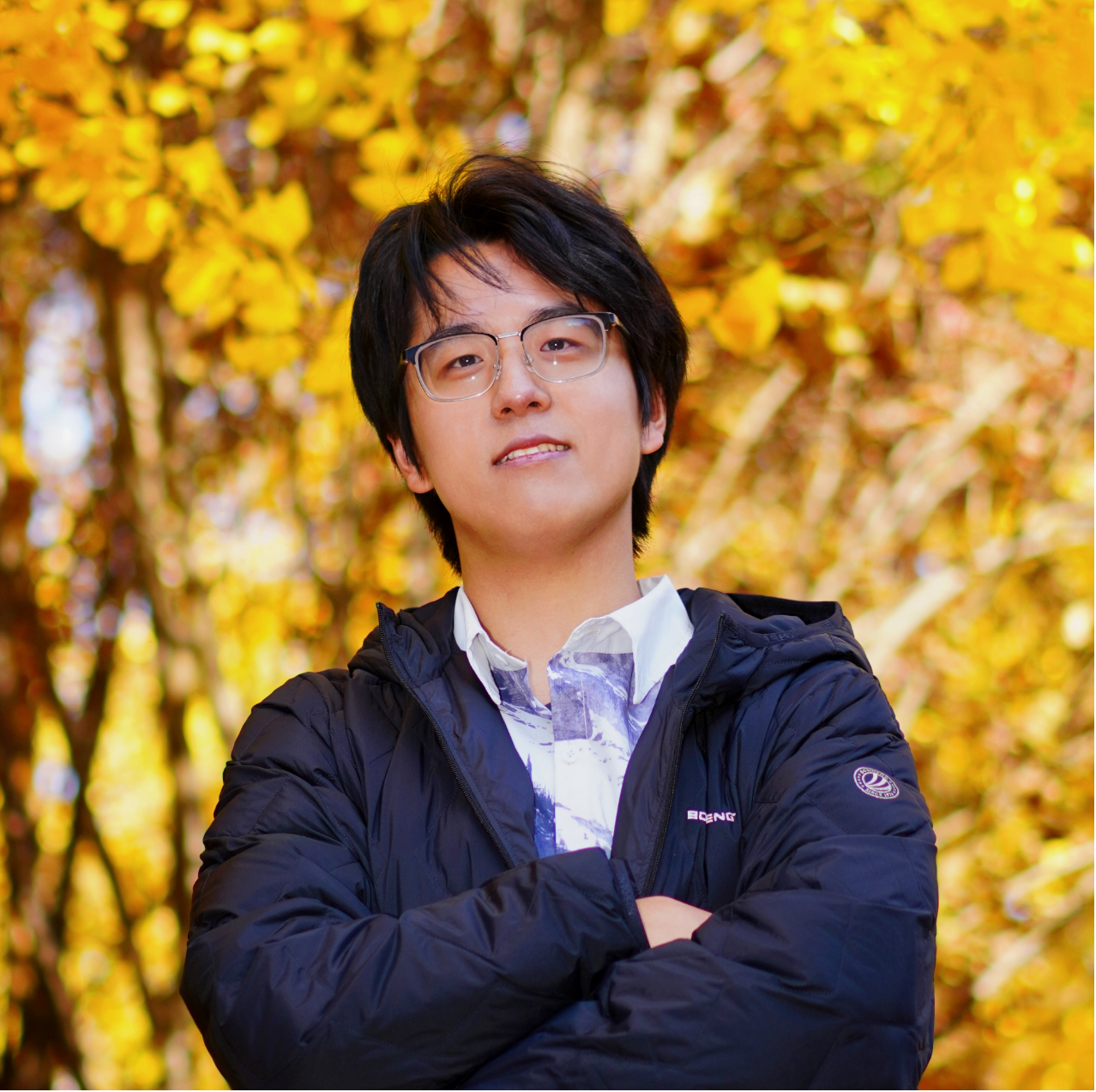
The gallery accepts ordinary Markdown images and links, so alternative text remains part of the rendered HTML.
<figure>
<img src="/image.png" alt="Descriptive alternative text"
width="1200" height="800" loading="lazy">
<figcaption>A concise caption.</figcaption>
</figure>
{{< gallery >}}


<p class="reference-gallery__caption">An optional caption for the full gallery.</p>
{{< /gallery >}}
Stress tests
Mixed-language prose should remain readable without unusual spacing: 研究笔记需要同时容纳方法、证据与尚未解决的问题。A field note should also preserve the assumptions behind a result so that it can be revisited later.
A long URL must wrap locally: https://example.org/research/magnetic-resonance-imaging/reconstruction/compatibility/reference?acquisition=ultra-low-field&reconstruction=physics-informed&validation=longitudinal-reproducibility.
The following no-space token must not widen the page:
ultralowfieldmagneticresonanceimagingreconstructionvalidationdatasetversion20261014abcdefghijklmnopqrstuvwxyz0123456789
The wide table in Tables, the display equation in Mathematics, and this long code line should each scroll inside their own content area:
pipeline://acquisition/preprocessing/interference-suppression/reconstruction/quality-control/export?dataset=longitudinal-ultra-low-field-neuroimaging-reference
Use mixed-language text directly: 中文与 English can share one paragraph.

Wrap deliberately long machine-readable values in a code block or an element
with the `reference-overflow` class.